The Future is NEUTRAL operates the first “Individual System”
- The Future is NEUTRAL operates the first Individual System in France for the end-of-life management of Renault Group Electric Vehicles Batteries, following approval published in the Official Journal on November 28, 2025.
- Extended Producer Responsibility (EPR) has been applicable to the recycling of EV Batteries since August 2025 and requires producers to join a Producer Responsibility Organization (PRO) or implement an Individual System by demonstrating a control of the end-to-end value chain, in order to secure their access to recycled materials.
- Already operating the Individual System for the management of End-of-Life Vehicles (ELVs) for 15 automotive brands in France, The Future is NEUTRAL now also manages the end-of-life of batteries.
- The Future is NEUTRAL relies in particular on its subsidiary INDRA AUTOMOBILE RECYCLING, an expert in the ELVs treatment as well as in the diagnosis and securing of EV Batteries, in order to direct them towards the most competitive recycling channels, with the support of its partners and its shareholder SUEZ, specialist in recycling and waste recovery.
“This first approval reinforces our belief in the competitiveness of our Individual System offer for the end-of-life management of electric vehicle batteries. Leveraging the complementary expertise of our subsidiaries and partners, we offer our circular economy solutions to all automotive manufacturers.”
Yann Velluet, VP Business Batterie
The Challenges of Battery End-of-Life: An Economic and Environmental necessity
Faced with economic, environmental, and sovereignty challenges, the circular economy is emerging as a key driver in the transformation of the automotive industry. Committed to this transition, The Future is NEUTRAL develops solutions to support the end-of-life management of batteries and guarantee their recycling and recovery.
Lithium-ion batteries in electric vehicles are made of strategic metals such as lithium, cobalt, and nickel. These materials are essential for the transition to low-carbon mobility, but their availability remains limited in Europe. Limiting this dependence is essential to guarantee European sovereignty.
The growing demand for lithium, cobalt, and nickel exacerbates supply tensions that have already existed for several years. The International Energy Agency (IEA) emphasizes in a report published in May 2025 that demand for these materials could increase three to sixfold by 2040, a growth driven in particular by the rise of electric vehicles and portable devices.
Repair and reuse before recycling batteries
The lifespan of an electric vehicle battery is currently estimated at over 15 years.
The Future is NEUTRAL relies on its subsidiary GAIA to repair batteries and keep them in vehicles for as long as possible: over 90% of defective batteries can be repaired, and more than 18,000 batteries have already been repaired by GAIA since 2012.
The battery doesn’t end with its automotive life. When its remaining capacity is no longer compatible with automotive use, or if it is still functional at the end of the vehicle’s life, GAIA can also prepare it for new uses: stationary storage or other mobility applications.
Recycling Batteries
Since August 2025, the new European Extended Producer Responsibility (EPR) regulations requires car manufacturers to finance the collection, ensure traceability, and actively contribute to the recycling of lithium-ion batteries. These obligations are part of an ambitious European framework, with progressively stricter recycling targets.
In this perspective, The Future is NEUTRAL and its partners are participating in the development of a closed-loop European battery recycling sector, in order to reintegrate recycled metals into new batteries as required by European regulation from 2031.
The Future is NEUTRAL contributes to this challenge by offering management of all operations necessary for recycling:
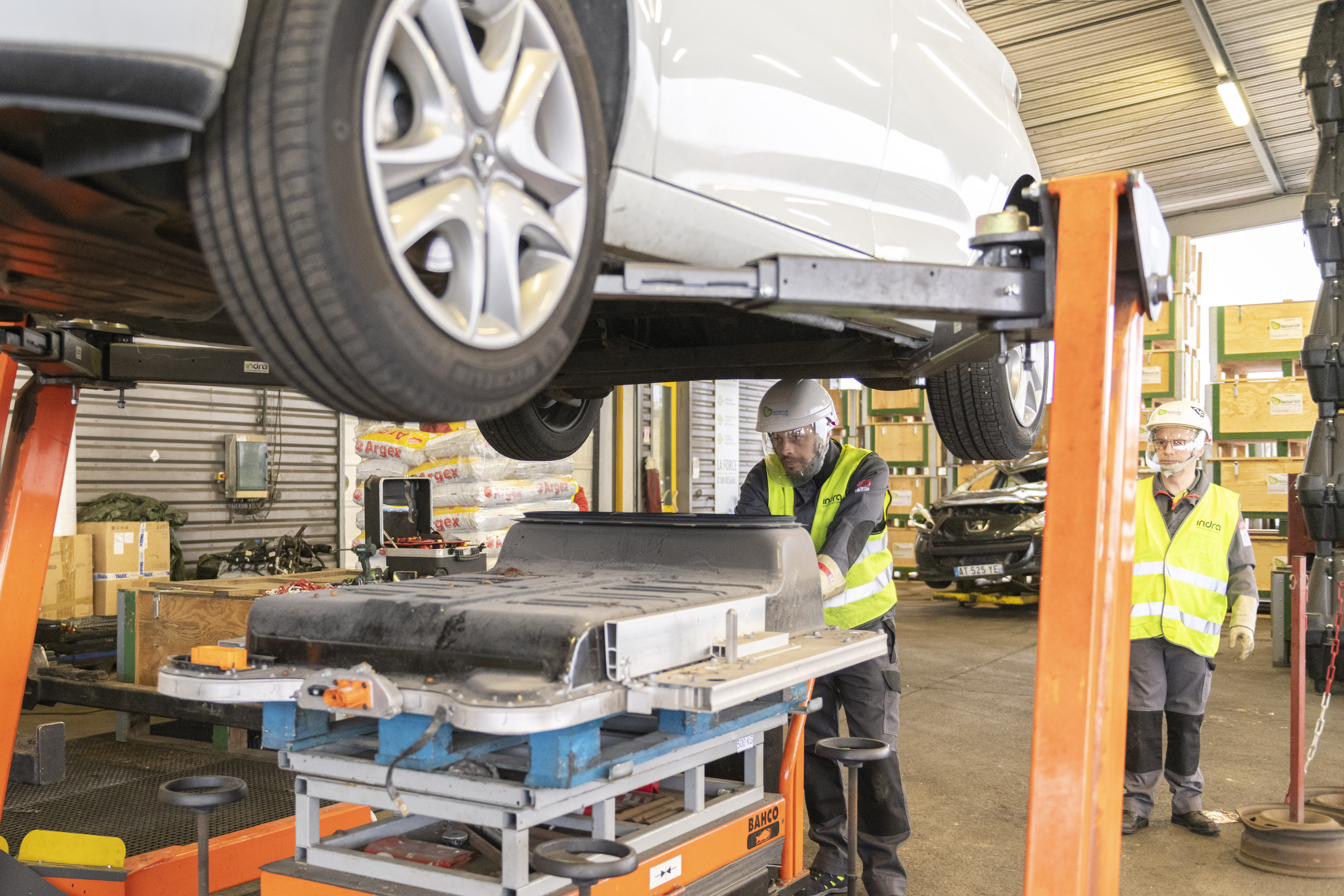
- Before being recycled, batteries from end-of-life electric vehicles (ELVs) are first removed from the vehicle following a precise procedure that guarantees quality and safety.
- These operations are carried out by ELV dismantling centers that handle and process electric or hybrid vehicles, such as those in the INDRA AUTOMOBILE RECYCLING network, a leader in ELV processing in France.
- They are then collected and transported safely in dedicated packaging to specialized facilities where they are discharged, dismantled, and recycled according to the objectives of the European regulations.
Definitions
Source : https://filieres-rep.ademe.fr/en |
DOCUMENTS