The Future is NEUTRAL extends its AUTOLOOP

- Developed by The Future is NEUTRAL and operational since early 2025, AUTOLOOP is a digital platform for collecting recyclable materials: polypropylene, copper, platinum group metals, aluminium, etc.
- NEUTRAL is now expanding this platform to collect electric vehicle traction batteries, which contain strategic metals such as lithium, cobalt and nickel.
- AUTOLOOP thus becomes a single platform for managing the recycling of materials and batteries, designed for all end-of-life vehicle (ELV) centres: a competitive solution, rigorous traceability and immediate implementation.
- AUTOLOOP enables compliance with the new European Extended Producer Responsibility regulation, which, from August 2025, requires automotive manufacturers to finance the collection, ensure traceability and actively contribute to the recycling of electric vehicle traction batteries.
“Professionalisation and digitalisation of materials and battery collection: that is our purpose. AUTOLOOP is a unique platform designed to improve the recovery of end-of-life vehicles, ensuring simplicity, competitiveness and traceability.”
Antoine Chéreau, Business Developer – The Future is NEUTRAL
AUTOLOOP: how does it work?
- ELV centres collect end-of-life vehicles, whether they are petrol, diesel, electric or hybrid, as is the case with the INDRA AUTOMOBILE RECYCLING network, the leading ELV processing company in France.
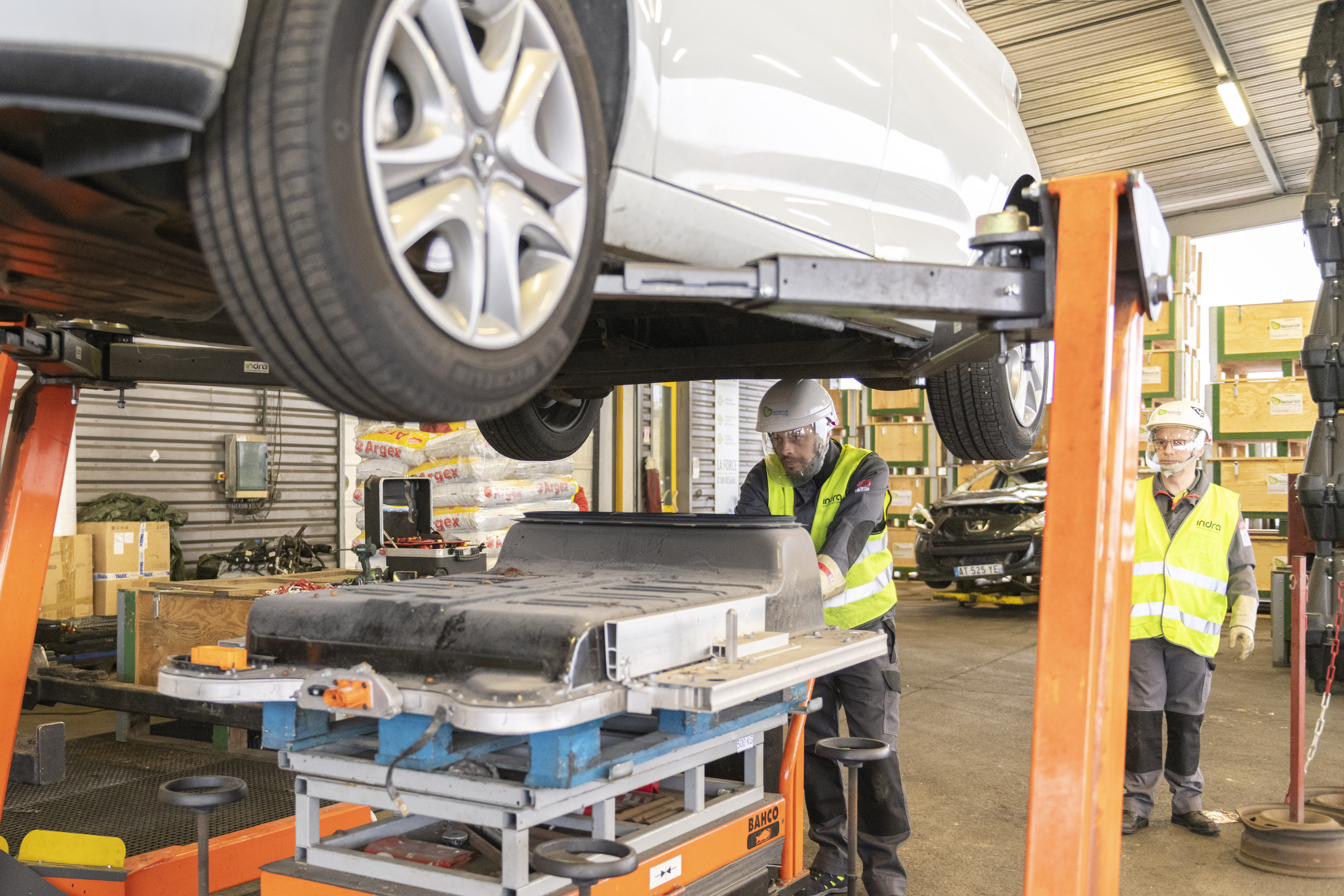
- ELV centres deregister, secure and decontaminate them: removal of traction batteries, extraction of fluids, heavy metals and refrigerant gases, and neutralisation of pyrotechnic components (airbags or pretensioners).
The ELV centre submits a collection request via AUTOLOOP for batteries from client brands (Individual System or eco-organisations that have chosen AUTOLOOP for the collection of their batteries). - The ELV centre dismantles the vehicle and extracts parts for reuse and parts for material recycling.
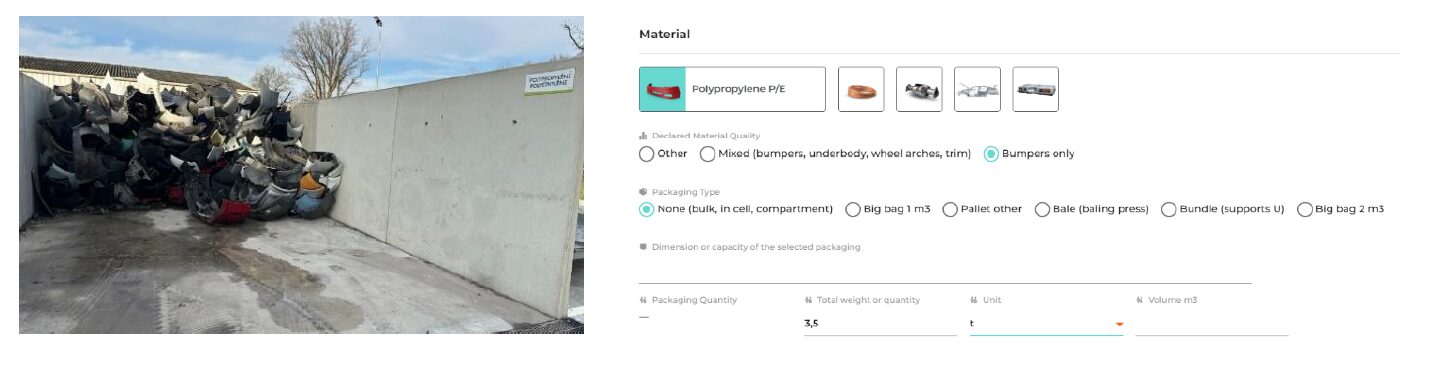
Parts intended for recycling are grouped into batches. For example, bumpers from ELVs (which cannot be reused as spare parts) are placed in containers. Once a minimum volume is reached – primarily to optimise transport costs – the ELV centre can offer its batch for sale on AUTOLOOP. - To do this, on the AUTOLOOP platform, the ELV centre records the characteristics of the batches of parts and each battery:
- Batches of parts: type, quality, packaging, weight or total quantity, etc.
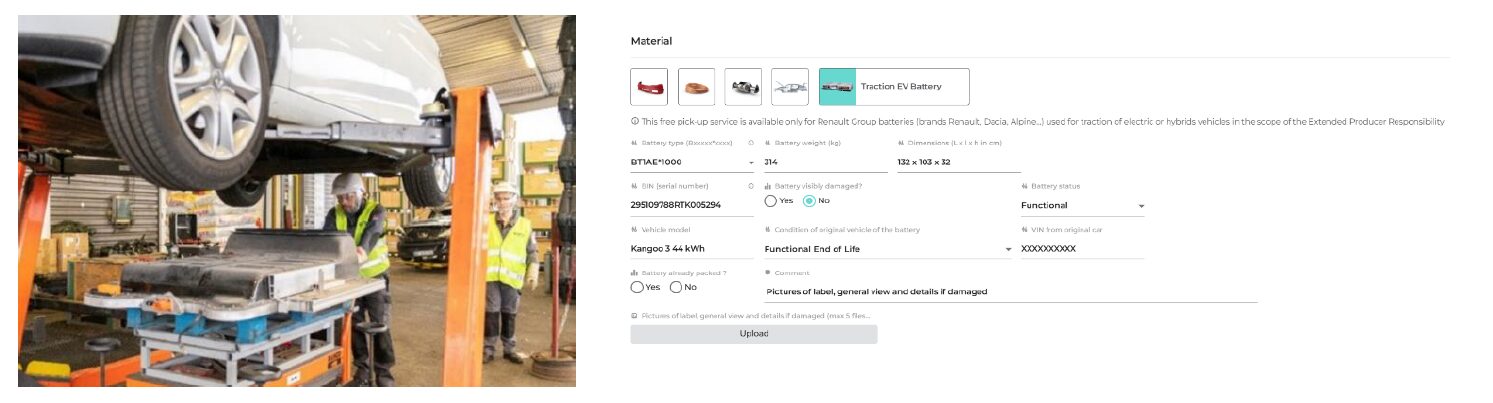
Once the quantity, quality and price have been agreed, the platform arranges collection and transport, as well as invoicing. - Battery: battery type, Battery Identification Number and Vehicle Identification Number (BIN and VIN), battery status, any damage, photos, etc.
Following analysis, the platform arranges the supply of specific battery packaging and its transport to specialised facilities operated by NEUTRAL and its partners, where it is unloaded, dismantled and recycled in accordance with the objectives of European regulatory requirements. - AUTOLOOP complies with the requirements for closed-loop battery recycling, ensuring that strategic metals are recovered for reuse in new batteries.
- Batches of parts: type, quality, packaging, weight or total quantity, etc.
AUTOLOOP and material recycling
AUTOLOOP and battery recycling
|
Definitions
|