Renault MASTER incorporates recycled materials sourced from car to car recycling,

The Future is NEUTRAL accelerates closed-loop automotive recycling
The automotive industry is entering a new phase of transformation: one in which the circular economy is fully integrated into vehicle design and production. At the heart of this shift, The Future is NEUTRAL, a joint subsidiary of Renault Group and SUEZ, is deploying an industrial-scale closed-loop circularity model for the automotive sector, from car to car.
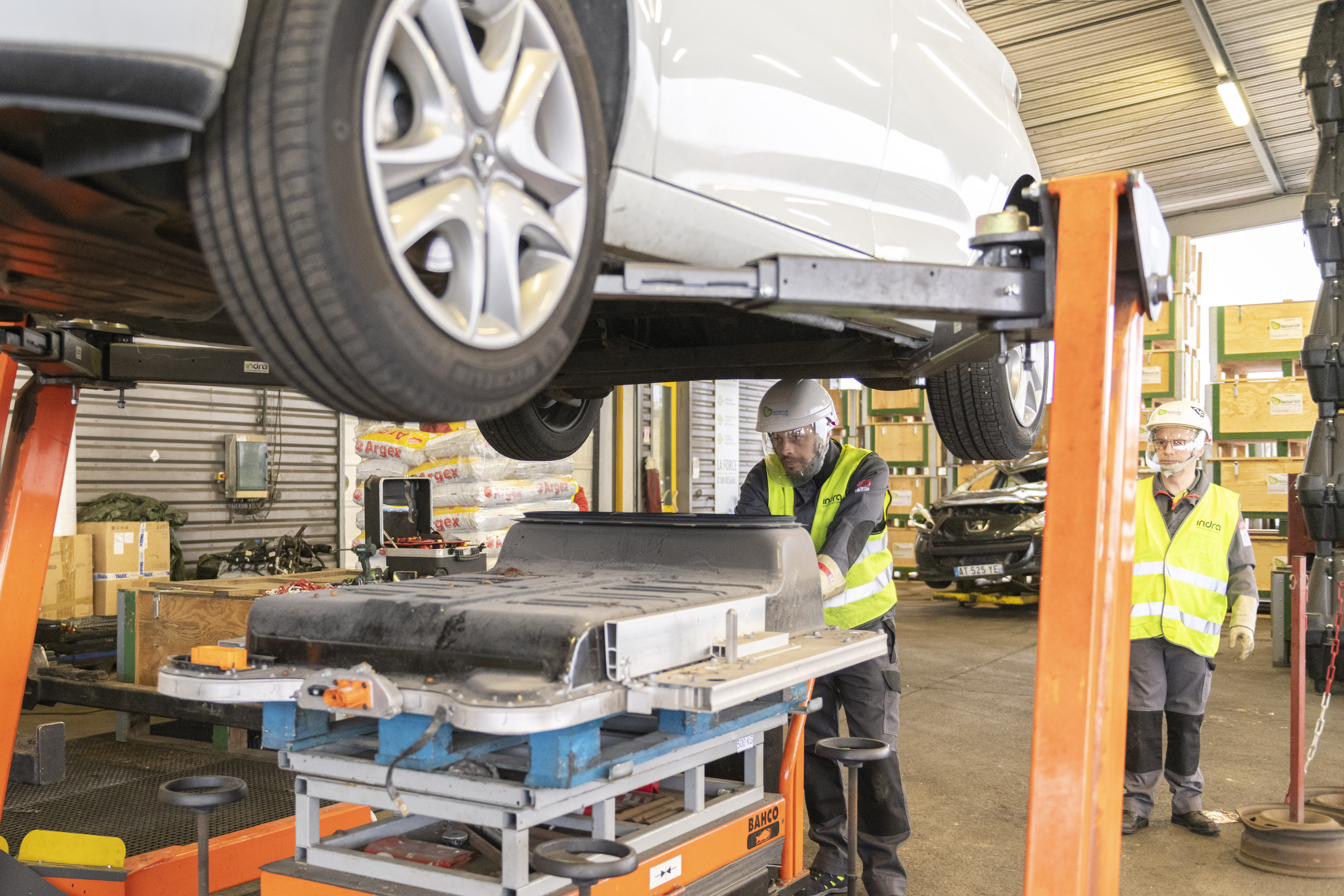
This approach makes it possible to reintroduce materials recovered from end-of-life vehicles (ELVs) into the manufacturing of new vehicles. Through its industrial ecosystem, The Future is NEUTRAL enables this complete loop: end-of-life vehicles are first collected and dismantled by its subsidiary INDRA; materials are then collected, sorted, prepared, and recycled by its subsidiary GAIA before being reintegrated into the automotive value chain.
By supporting all automotive manufacturers in their recycling strategies, regulatory compliance, and decarbonization efforts, The Future is NEUTRAL is helping establish recycling as a major industrial driver.
When recycled materials gain a second life: the example of Renault MASTER
Renault MASTER provides a concrete illustration of this transition. For the first time, a material containing 20% recycled plastic sourced from end-of-life vehicles (ELVs) is being used in a visible area of the cabin: the upper section of the dashboard. Specifically, this involves polypropylene recycled from bumpers removed from end-of-life vehicles.
This development marks an important milestone for the automotive industry. Visible interior components are subject to particularly demanding standards in terms of perceived quality, mechanical strength, durability, and safety. Integrating recycled materials into this type of component demonstrates the industrial maturity of closed-loop automotive recycling.
With MASTER, Renault confirms its ability to incorporate recycled materials into its commercial vehicles without compromising performance or user experience.
An end-of-life vehicle can therefore become a strategic resource for producing the vehicles of tomorrow.

Sophie SCHMIDTLIN
CTO – The Future is NEUTRAL
“The real scaling of the automotive circular economy begins when recycled materials are no longer limited to secondary uses, but are reintegrated into demanding and visible applications in new vehicles. This is precisely the ambition of the car-to-car model driven by The Future is NEUTRAL”.
European regulations are accelerating the transformation of the automotive sector
The European regulatory framework is significantly strengthening this momentum.
On December 12, 2025, the Member States of the European Union and the European Parliament reached an agreement on future regulations concerning end-of-life vehicles and the use of recycled plastics.
Starting in 2032, at least 15% of the plastics used in cars and light commercial vehicles will have to come from recycled plastics sourced from post-consumer products, with 20% of that share originating from end-of-life vehicles (ELVs). This proportion will increase to 25% by 2036.
This regulatory shift is built around three major pillars:
- Improving vehicle design to facilitate dismantling, reuse, and recycling
- Introducing binding targets for the incorporation of recycled materials
- Strengthening producer responsibility for the collection and treatment of end-of-life vehicles
For automotive manufacturers, these regulations make recycling a strategic challenge, both industrially and economically.
Eco-design: embedding recycling into vehicle design from the outset
Achieving a circular economy in the automotive industry requires action long before a vehicle reaches the end of its life. This is the core challenge of Design for Recycling, an eco-design approach that integrates recycling requirements from the earliest stages of development.
Through its INDRA entity, The Future is NEUTRAL supports automotive manufacturers—particularly design teams—and suppliers in embedding this approach from the very first phases of product development. Together, they define strategies tailored to new market constraints while identifying opportunities for value creation.
The goal is to optimize both environmental and economic performance across the vehicle’s entire lifecycle.
In practical terms, this means:
- Designing components that are easy to dismantle
- Prioritizing assembly methods that facilitate material separation
- Anticipating future material recovery and recycling value chains
- Promoting large-scale reuse and recycling
This approach aims to ensure, at optimal cost, a vehicle that is at least 85% recyclable and 95% recoverable, in compliance with the requirements of the European ELV (End-of-Life Vehicles) regulation.
Renault MASTER provides tangible proof of this today: the future of a circular automotive industry is no longer a projection—it is already in production.